
Discover how F1 2026 regulations and technical rules will redefine Formula 1 and the engineering jobs behind them.
In 2026, Formula 1 enters a new era defined by sustainability, efficiency, and smarter performance. These F1 2026 regulations will not only reshape how cars race on track, but also how teams design, develop, and operate them behind the scenes.
This shift won’t be felt only by Formula 1 drivers and teams. Engineers, designers, technicians, and software specialists will be at the heart of this transformation, as Formula 1 adapts to new power unit architectures, active aerodynamics, and advanced safety systems.
At Recrewit, we’ve seen how every major update in Formula 1 technical regulations reshapes entire career paths. As a recruitment partner for multiple motorsport and high-performance engineering projects across Europe, we understand what this new regulatory era means for the people building the next generation of racing machines.
Read more about motorsport engineering careers.
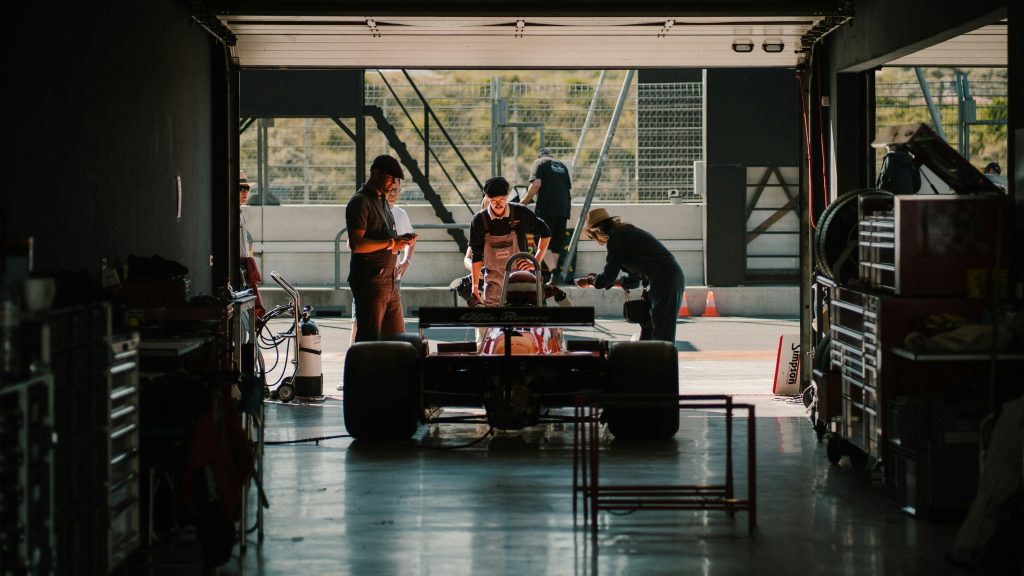
Now, let’s break down the four main changes introduced by the Formula 1 2026 regulations and their impact on both racing performance and engineering jobs.
Power Units 2.0: A 50/50 Hybrid Revolution in Formula 1
The Formula 1 2026 engine regulations introduce a radical 50/50 power split between internal combustion and electric systems, marking a major increase in electric contribution compared to current power units.
What’s changing:
- MGU-H removed: The complex exhaust-energy recovery system is eliminated.
- MGU-K output tripled: Electrical power rises from 120 kW to 350 kW, making electrification central to performance.
- 100% sustainable fuels: ICEs will run exclusively on non-fossil fuels developed with major energy partners.
- Simplified hybrid systems: Lower costs and easier entry for new manufacturers such as Audi and Ford-Red Bull Powertrains.
What it means for performance in Formula 1:
Energy management becomes a defining factor. Formula 1 engineers must optimise harvesting, deployment, and thermal efficiency using advanced control software. Although top speed may slightly reduce, acceleration efficiency and corner-exit performance will improve.
Career impact:
Demand will grow for:
- Hybrid systems engineers.
- Battery cooling and packaging specialists.
- Energy-management software developers.
- Sustainable fuel and combustion specialists.
Lighter Cars: Goodbye DRS, Hello Active Aerodynamics
Under the F1 2026 technical regulations, cars will be lighter and narrower, improving efficiency and agility. Therefore, the traditional DRS system disappears and is replaced by active aerodynamics with adaptive front and rear wings.
Cars will operate in two main modes:
- High-downforce mode for corners and braking.
- Low-drag mode for straights.
This evolution forces aero teams to integrate CFD, mechanical design, and control software more tightly than ever.
Impact on racing:
Expect closer racing, reduced tyre wear, and more natural overtaking opportunities thanks to dynamically managed airflow
Career impact:
New opportunities will arise for:
- CFD engineers (transient airflow).
- Mechatronics and actuation specialists.
- Control-systems engineers.
- Lightweight structural engineers.
Manual Override Mode: Tactical Electric Boost
Instead of DRS zones, drivers will deploy limited electric boosts from the MGU-K. Also, these boosts will be tightly regulated and strategically deployed, adding a new tactical layer to race management.
Impact on race dynamics:
Teams will rely heavily on predictive modelling and real-time decision-making to optimise energy use across a race.
Career impact:
Growing demand for:
- Energy-strategy engineers.
- Driver-interface (HMI) developers.
- Predictive data analysts.
- Hybrid-system control software engineers.
Safety 4.0: A Stronger, Smarter Formula 1 Cockpit
Safety updates within the Formula 1 2026 regulations introduce stronger crash structures, improved cockpit protection, enhanced ERS status lights, and advanced fire-suppression systems.
Engineering safety now intersects with materials science, high-voltage systems, and real-time diagnostics.
Career impact:
Increased need for:
- Safety systems engineers.
- High-voltage specialists.
- Composite repair experts.
- Test and validation engineers.
What This Means for Motorsport Professionals
For professionals working in motorsport, or aiming to enter it, the F1 2026 regulations represent more than a rulebook. They define the skills, technologies, and profiles that will dominate elite motorsport engineering over the next decade.
Why Recrewit Is Watching Closely
At Recrewit, we don’t just follow industrial trends, we help build the teams behind them.
Our Motorsport Division supports OEMs, race teams, and engineering consultancies across Europe with specialist recruitment in design, simulation, electrification, and high-performance production.
As Formula 1 2026 approaches, demand is already rising for profiles in:
- Electrical and hybrid powertrain engineering
- Simulation and control integration
Advanced materials and safety systems
If you’re an engineer ready to shape the next era of Formula 1, or a company building its future performance team, get in touch with Recrewit to explore how we can work together.
Formula 1 new regulations in 2026 are not just a technical overhaul. They’re a talent revolution.